Smoke & Mirrors: The Dark Underbelly of the Green Boom on Navajo Land
There’s a thin line between the American Dream and a nightmare. For some, the promise of quick riches in a booming industry has turned that dream into a harsh, unrelenting reality. In the sprawling landscapes of the Navajo Nation, under the broad desert sky, a grim tale unfolded—one of exploitation, deceit, and human trafficking, all under the guise of the green gold rush.
A Deal with the Devil
When the COVID-19 pandemic hit, the economy took a nosedive. Jobs vanished overnight, and desperation set in like a dark cloud over the Chinese immigrant communities in California. Enter Irving Lin—a man with a vision, or so he claimed. He saw opportunity where others saw despair. Lin, along with his associates, recruited Chinese immigrants with promises of decent pay for farm work in the great expanse of New Mexico. These were people clinging to the hope of survival, ready to believe in the prospect of an honest day's work. What they found, instead, was a trap.
The recruits were driven from California to the arid lands of the Navajo Nation, where they were stripped of their phones and car keys, herded into hotels, and monitored by armed guards. These workers were nothing more than cogs in Lin's machine—forced to sit on overturned buckets, trimming for up to 15 hours a day, for no pay, in rooms without ventilation. This was no farm; it was a prison without bars.
The Mirage of Legality
Lin's operation, however, was not confined to the Navajo Nation. It spanned across states, exploiting every legal loophole and skirting every regulatory line. He promised investors legal returns from farms in Oklahoma, where regulations were lax, and enforcement even laxer. But this was a man who built his empire on lies. The plants cultivated on Navajo land weren’t the harmless hemp he claimed—they were high-THC plants, illegal under both federal and Navajo law.
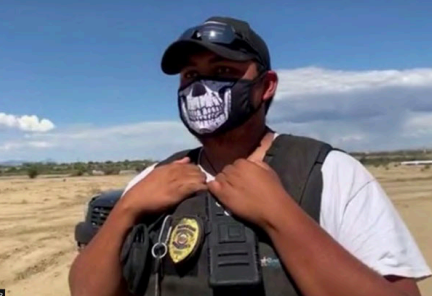
Despite the looming legal threats, Lin and his partners persisted. When Navajo police tried to access the farms, they were met with resistance, denied entry by workers who claimed they needed to hear from their "boss"—understood to be Dineh Benally, another key player in this sordid affair. Former Navajo Nation Attorney General Doreen N. McPaul herself witnessed the intimidation tactics employed by the security guards protecting these illegal operations.
Skin Walker
In August 2018 federal agents — DEA, the U.S. Attorney’s Office and local sheriffs — hit a massive illicit growing network in Cortez, Colorado, seizing what prosecutors later called over 80,000 plants and tying the operation to a California-linked Chinese trafficking ring. That bust set the tone for a multi-agency probe that swept into Shiprock, a rare, water-rich agricultural ribbon on the Navajo Nation, where family corn farms and ceremony intersect with outside money and greenhouses.
Locals say the newcomers masked operations as legal farms, sparking heated confrontations, marches to farm gates, arson at structures, and death-rumors that nearly provoked bloodshed. Benally himself was accused of aggressive acts — including an alleged attempt to ram protesters — and the atmosphere grew so volatile that some neighbors openly armed themselves to “defend” their fields.
Self Dubbed “Father of Native American Hemp”
Enter Dineh Benally, a Navajo businessman from Shiprock, New Mexico; former Navajo Nation Presidential candidate, and former President of the San Juan River Farm Board, once touted as a pioneer in tribal agriculture who instead became the central figure in one of the largest illegal grow operations in the Southwest. Between 2018 and 2020, Benally and his partners built more than 30 farms across Navajo land, exploiting immigrant and local labor under abusive conditions while falsely claiming to grow legal hemp. Workers reported being confined, unpaid, and forced to work long hours; investigators also tied Benally to environmental violations, including polluting the San Juan River with unpermitted dams and waste runoff.
Federal prosecutors later linked him to trafficking over 1,000 kilograms of product, harboring undocumented workers, smuggling pesticides, and possessing firearms to protect his operation. As of late 2025, Benally has pleaded guilty to 15 felony counts and faces a mandatory minimum of 15 years in prison, with potential life sentencing and multi-million-dollar fines pending formal sentencing.
Child Labor
The exploitation didn’t stop at immigrant workers. The Defendants saw fit to employ Navajo children, some as young as ten years old, to work grueling 10-hour shifts for a mere $5 an hour. The kids hauled heavy bags of soil, handled dangerous chemicals, and operated machinery with little regard for their safety. This wasn’t just illegal—it was inhumane.
Navajo Nation Fights Back
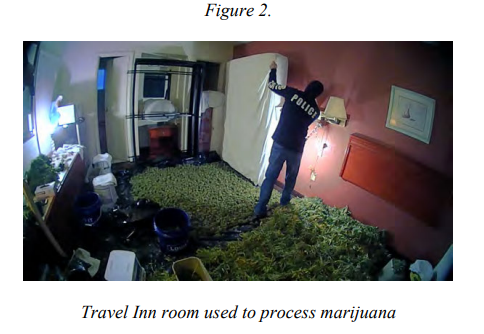
In June 2020, the Navajo Nation, tired of the blatant disregard for its sovereignty and laws, filed a lawsuit to put an end to these operations. A Temporary Restraining Order (TRO) was issued, but Lin and his cronies were not easily deterred. They continued their work under the cover of night, moving their processing operations to off-reservation locations like the Travel Inn in Farmington, New Mexico.
It was here, in this nondescript motel, that the final chapter of this tragic story played out. On October 8, 2020, responding to a tip, the Farmington police raided the Travel Inn. What they found was shocking—17 Chinese workers, oblivious to the legal and physical dangers surrounding them, still trimming as the police stormed in. Over 2,000 pounds of plants were seized, worth millions on the black market. The workers were arrested, facing serious drug trafficking charges, their nightmare compounded by the prospect of years in prison.
Greenhouse Homes
Lin’s workers were kept in conditions that could only be described as deplorable. They were housed in trailers and mobile homes without proper sewage facilities, crammed into rooms where they couldn’t leave without permission. They were given just enough food and water to survive, but not enough to live. These were people pushed to the edge, some of whom had risked everything to come to America, only to find themselves locked in a modern-day sweatshop.
Reports of human trafficking began to surface, with local law enforcement and media finally shedding light on the operations that had been hidden in plain sight. Despite the TRO, the Defendants pushed forward, driven by the desire to recoup their investments at any cost. The workers, cut off from the outside world, were left to toil in misery, unaware of the illegalities they were part of.
After the Fall
Even as the legal system began to close in on Lin and his associates, their disregard for the law and human life remained unshaken. The operations were a smokescreen, a thin veil of legality draped over a deeply corrupt enterprise. The workers, many of whom still bear the scars of their ordeal, were just another expendable resource in a business that treated human lives as collateral damage.
This is the dark side of the Industry boom—a story of greed, exploitation, and the lengths some will go to for a piece of the pie. It's a reminder that behind every promise of wealth, there’s often a cost that can’t be measured in dollars. For those caught in the web of Lin’s operations, the price was far too high.