“Sangre De Cristo”: Market Intelligence Vs. Street Smarts
The market is maturing, and so is the language. Some of it is baked into culture — eighths, quads, zips; fronts, come ups, and flips. You don’t need a glossary for these if you grew up around it. But for operators stepping in from the traditional market, it’s easy to get lost in translation.
That LinkedIn language. Those corporate phrases like …“Market Intelligence”; “Actionable Insights'“. Suit terms for keeping your head on a swivel.
Scoping The Ops
What do they carry? Who do they rock with? If you already know the brands, odds are you know the sales rep, the pricing, and how that relationship works. This is called Assortment analysis and supplier mapping: This is understanding product mix, brand penetration, pricing, and vendor relationships.
Casing the joint
Who shops there? What’s the managers name and contact? Where are they located? When do they open and close? Why the creepy questions? That’s demographics, market analysis, and operational intelligence in a tie and blazer. This is the backbone of go-to-market planning so you don’t land on a busy; or worse, a dry corner.
Sniff Test (trust but verify)
Does the story line up with reality? Are the numbers real, or just dressed up under good lighting? Are they compliant, or just hoping no one looks too close? In professional terms, this is Vendor Onboarding, Vetting, and On-Site Visits— this means verifying claims to CYA (Cover Your A**). Is it actually a “state of the art infusion process and facility”, Or just a group of stoners packing cones next to their dogs.
Vibe Check
The part no software has ever figured out. What’s the energy? Whats the reputation? Anyone that can vouch for them? The industry is relatively small still, and word of mouth travels fast. CPG calls this Vendor Scorecards, and Risk Assessment. Is this a business partner thats going to be reliable and easy to do business with, or a PIA.
Street Merchant
Sellers need to know who they’re selling to. What actually moves. How pricing and promos really work. Who already has the buyer’s ear. How fast they pay. Whether this is a long-term relationship or a one-time flip. In CPG, this is account intelligence. On the street, it’s simple: you don’t front weight to someone you don’t trust to re-up clean
Buyers have the opposite risk. Now you care about consistency, not hype. Whether “premium” is real or just good jars and better lighting. Compliance history. How suppliers behave when something breaks. Who they’ve burned before. That’s supplier intelligence and due diligence. Everybody talks loud when the harvest is fresh. You learn who stays solid when the jars start drying out.
Tool Box
Now once you get to the point of needing these services there is a grip of options to choose from, and thats where the value proposition falls apart. They don’t fail because they’re useless. They fail because they’re partial. One tool tracks pricing. Another watches menus. Another scores CRM data. Each solves a slice, never the system. None of them know who flakes on deliveries, who quietly switched buyers, who pays late but talks big, or why someone really left their last shop. That knowledge lives in conversations, text threads, missed calls, and remembered headaches — not dashboards.
Tribal Knowledge
Which is why operators still do the leg work. You walk the floor. You talk to buyers and reps. You watch how product actually moves. You feel friction in real time. No platform can read a room, hear hesitation in a voice, or tell when “maybe next week” really means no. That’s tribal knowledge — the kind that you can’t automate, that’s instinct.
The Mountain
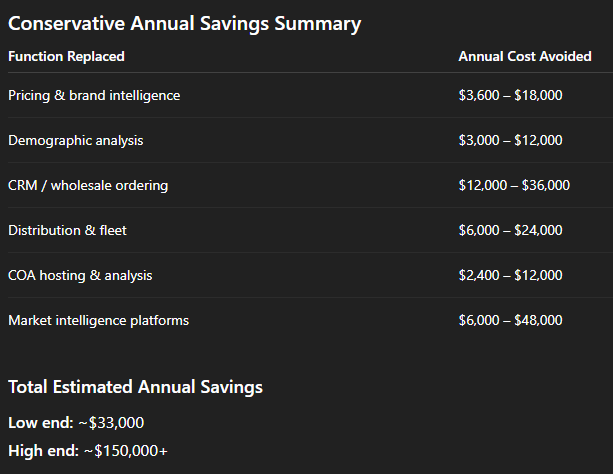
Building this in-house has changed everything for us. We save money by not stacking tools that don’t talk to each other. On top of that most of these services you only use a few times, so by avoiding contracts the savings stack quick. Ships come and go, the mountain stays forever.