New Mexico, Epstein, & The Missing “Death Bell”
In the aftermath of the Epstein files resurfacing, New Mexico isn’t just a footnote—it’s one of the ashtrays. The state appears more than 5,000 times in the documents, tied to flights, property records, purchases, and a long list of visits that read like a guest log no one wants their name on. What’s unsettling isn’t just the frequency, but the caliber of people passing through: executives, political power players, and corporate brass whose presence raises questions that haven’t been answered and, so far, haven’t been forced to be.
No Place Like…
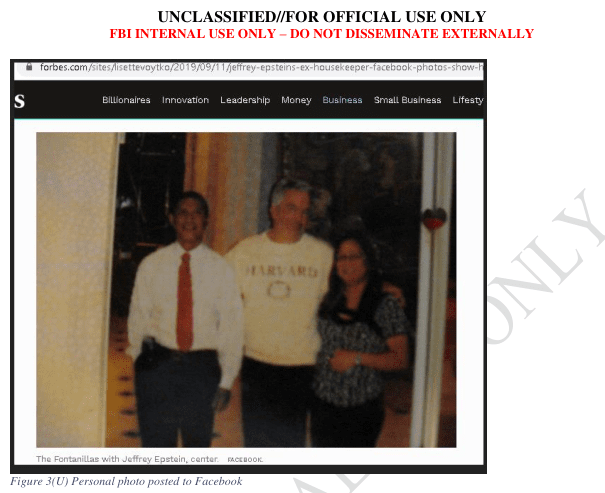
At the center of it all sits Zorro Ranch, the roughly 10,000-acre property near Stanley called one of many homes by Jeffrey Epstein. Massive, secluded, and guarded by layers of silence. Employees were sworn to secrecy. Contractors worked specific rooms, specific jobs, and asked no questions if they wanted to keep getting paid. When Epstein was arrested and later died in federal custody in 2019, the ranch flipped from private playground to global crime scene.
See No Evil, Speak No Evil
One detail in the files stands out you can’t ignore: New Mexico never required Epstein to register as a sex offender in the state, despite his 2007 federal conviction. This wasn’t an oversight—it was a legal interpretation. Because Epstein did not have a New Mexico conviction and his Florida plea deal fell into a gray area under interstate registration standards at the time, the state did not require him to register. The result was that Epstein could maintain a large, well-known property in New Mexico without the public notification or monitoring that registration would have triggered.
The “Death Bell”
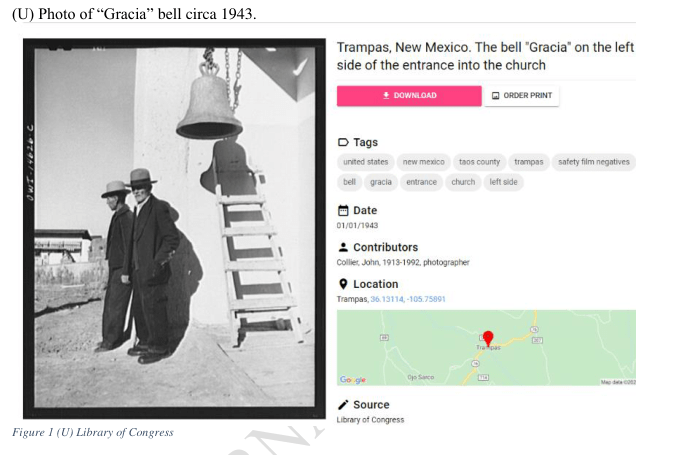
An internal FBI intelligence report from August 2020—marked UNCLASSIFIED / FOR OFFICIAL USE ONLY and produced by FBI Albuquerque—lays out a parallel investigation that feels ripped from a different genre entirely. The Bureau assessed, with medium confidence, that a missing Spanish Colonial church artifact known as the “Death Bell” may have been housed at Zorro Ranch.
The bell belonged to San Jose de Gracia Church in Las Trampas, a National Historic Landmark dating back to the 18th century. One of its two original bells disappeared in the 1930s. For decades it was church lore—another piece of New Mexico history lost to time. That changed when witnesses recalled seeing a bell matching its description in photographs of a Northern New Mexico estate featured in a real estate magazine around 2014–2015. When Epstein’s ranch started dominating the news in 2019, the dots connected themselves.
The FBI report details why the theory stuck. Photos and videos from inside Zorro Ranch showed what appeared to be an extensive collection of New Mexico Colonial-style artwork and artifacts. Former housekeepers, contractors, and visitors were identified as potential witnesses who may have seen what was kept inside. The Bureau noted that additional artifacts could have been stored there as well, and that estate settlement proceedings might eventually surface inventories or evidence logs confirming what passed through those rooms.
Secret Tunnels
Adding to the unease are allegations—never formally proven—of underground tunnels on the property, echoing similar claims tied to Epstein residences elsewhere. Whether those tunnels existed or not almost becomes beside the point. The ranch had layers: physical, legal, and social. And every layer made accountability harder to reach.
Louie Lobo
UNM also appears in the files; Dated August 10, 2015, an email chain shows Jeffrey Epstein personally included on plans to arrange a “ZDC – Site Visit” to his Stanley, New Mexico property, Zorro Ranch. University of New Mexico was contacted seeking someone to walk the land and explain its geology, a request that was circulated within UNM’s Earth & Planetary Sciences department.
A PhD candidate quickly volunteered to visit the site, bring maps, and discuss the Galisteo Basin’s geology, outlining flexible availability.
The Santa Fe Institute
In a 2-hour video interview with Steve Bannon, Jeffrey Epstein described the Santa Fe Institute as a place that attempts to “explain the unexplainable”—a fitting mission, considering the strange magnetism New Mexico has always had for secrets, outliers, and unsolved mysteries.
His comment wasn’t just a nod to the Institute’s intellectual ambitions; it was an acknowledgment of the deeper undercurrent that locals know all too well. In a state where ancient ruins, covert military projects, and generational folklore collide, the line between science and the supernatural is blurry at best. Epstein’s fascination with institutions like SFI wasn’t random—it was calculated, and he knew that tapping into New Mexico’s mystique made it easier to hide in plain sight.
Deliver Us From Evil,
This isn’t a clean story. There’s no satisfying resolution, no final reveal. What there is instead is a pile of documents, witness statements, and investigative gaps that paint a picture of New Mexico as more than a backdrop. It was a destination. A refuge. A place where history, power, and secrecy intersected in ways we may never fully comprehend.