COA Automation & Ai Services
A Certificate of Analysis (COA) is a lab-issued document that verifies exactly what’s in a product—potency, contaminants, and overall safety. It’s generated by a licensed third-party lab after testing a batch, and it’s the backbone of compliance and consumer trust in regulated markets.
A COA isn’t just a number sheet—it’s a structured breakdown of chemical and safety data tied to a single production run. Labs quantify cannabinoids, terpene profiles, and run full-panel safety tests depending on state requirements. The format varies by lab, but the underlying schema is consistent across systems.
Cannabinoids: THC, THCA, CBD, CBDA, total potency
Terpenes: dominant compounds that influence profile and effect
Safety panels: residual solvents, pesticides, heavy metals, microbial contamination
At scale, COAs get messy fast—PDFs, emails, inconsistent formats. Most operators end up leaving them in their inboxes so they can have somewhere to search for them, that works when your just a grow, but if your vertical the rest of the chain might need those too at some point.
COAs aren’t just lab docs, they’re the shared language between teams. The risk isn’t missing data, it’s misalignment: wrong strain story, wrong potency expectations, wrong batch leaving the building.
Who Else Needs The COAs?
Marketing and Sales are working off the same raw material, just different angles—story vs conversion. If marketing gets the profile wrong, sales inherits the problem immediately: mismatched expectations, returns, lost trust. If its a Retailer, they will need copies too.
Operations lives in the details—this is where COAs prevent costly mistakes. Overlapping harvests, similar strain names, or re-runs can create confusion fast; the COA is the final check before anything moves. If the batch doesn’t match the COA, it doesn’t ship.
Compliance needs immediate retrieval during inspections; finance needs documentation to back inventory value, write-offs, or disputes. At this level, COAs are treated like contracts—complete, traceable, and defensible.This is where COAs shift from operational tool to legal record.
What’s on the COA becomes reality downstream—labels, menus, sell sheets. If the strain name or profile is wrong at that level, you’ve already lost control of the narrative and created a compliance risk.
When buyers purchase on potency, they’re making a quantitative decision—break that and you erode trust fast. Multiple batches of the same SKU can vary widely; without COA-level control, you’ll ship mixed potency and create complaints or returns. The only way to manage it is batch-level visibility at the order and fulfillment stage.
Product moves faster than people can read—that’s the operational truth. If COAs stay as files, they get skipped; Converting them into a searchable table turns one-off questions into instant answers without slowing the floor.
Automation Process
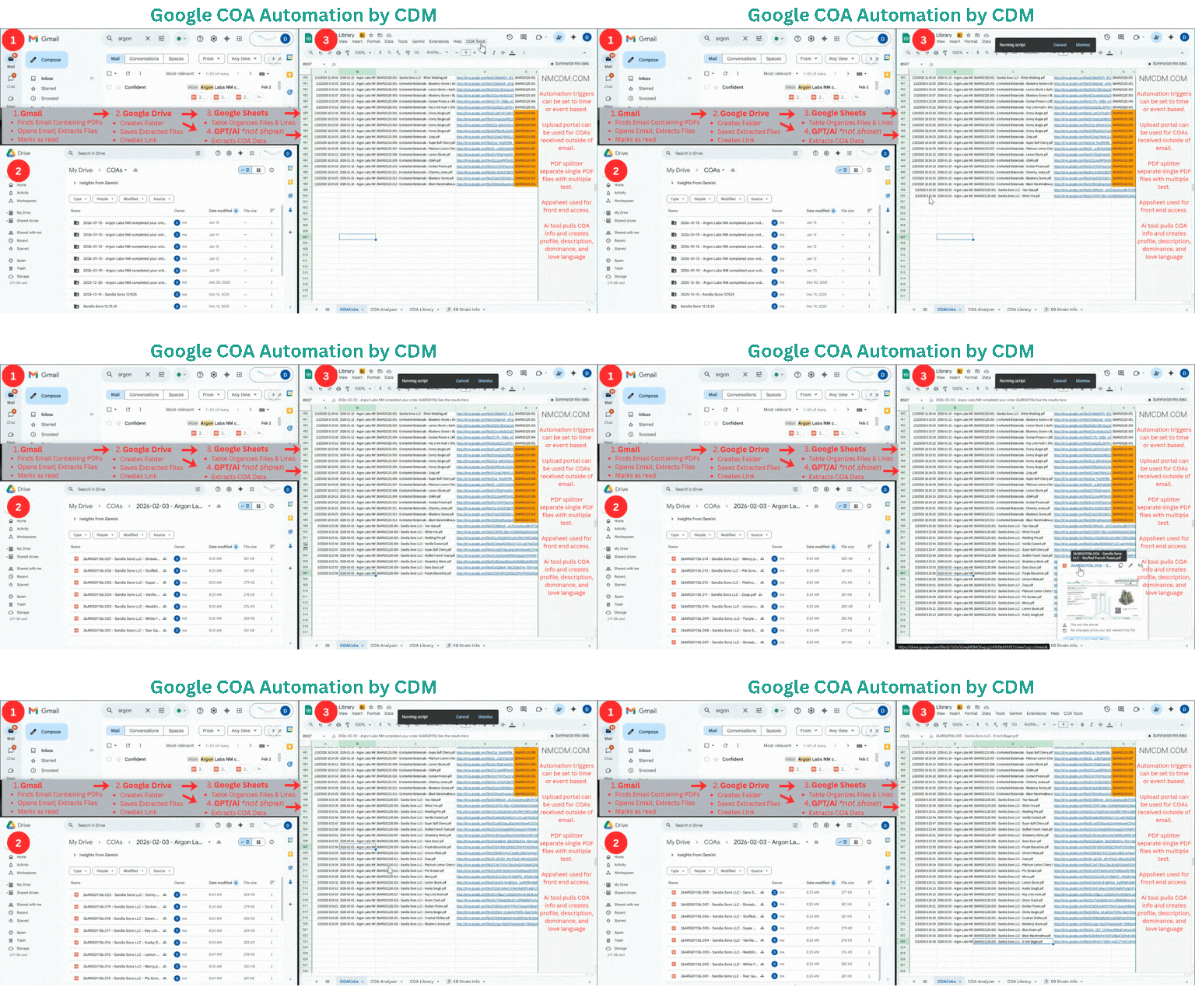
An automated pipeline captures incoming COAs from email, stores them in a structured Drive environment, and logs each file with metadata into a centralized workbook. This replaces fragmented inbox storage with a consistent, queryable system tied to batch-level tracking.
An AI layer processes each new folder, extracts lab data from PDFs, and converts it into structured fields. It standardizes strain names, potency, and batch/sample IDs while generating simplified descriptive outputs for broader use.
All outputs feed into a single workbook that functions as a live COA database. Teams can search, filter, and reference batch-level data instantly without opening individual PDFs,
Automation Example